Open |
Open from
Closed today
Ticketing
My selection

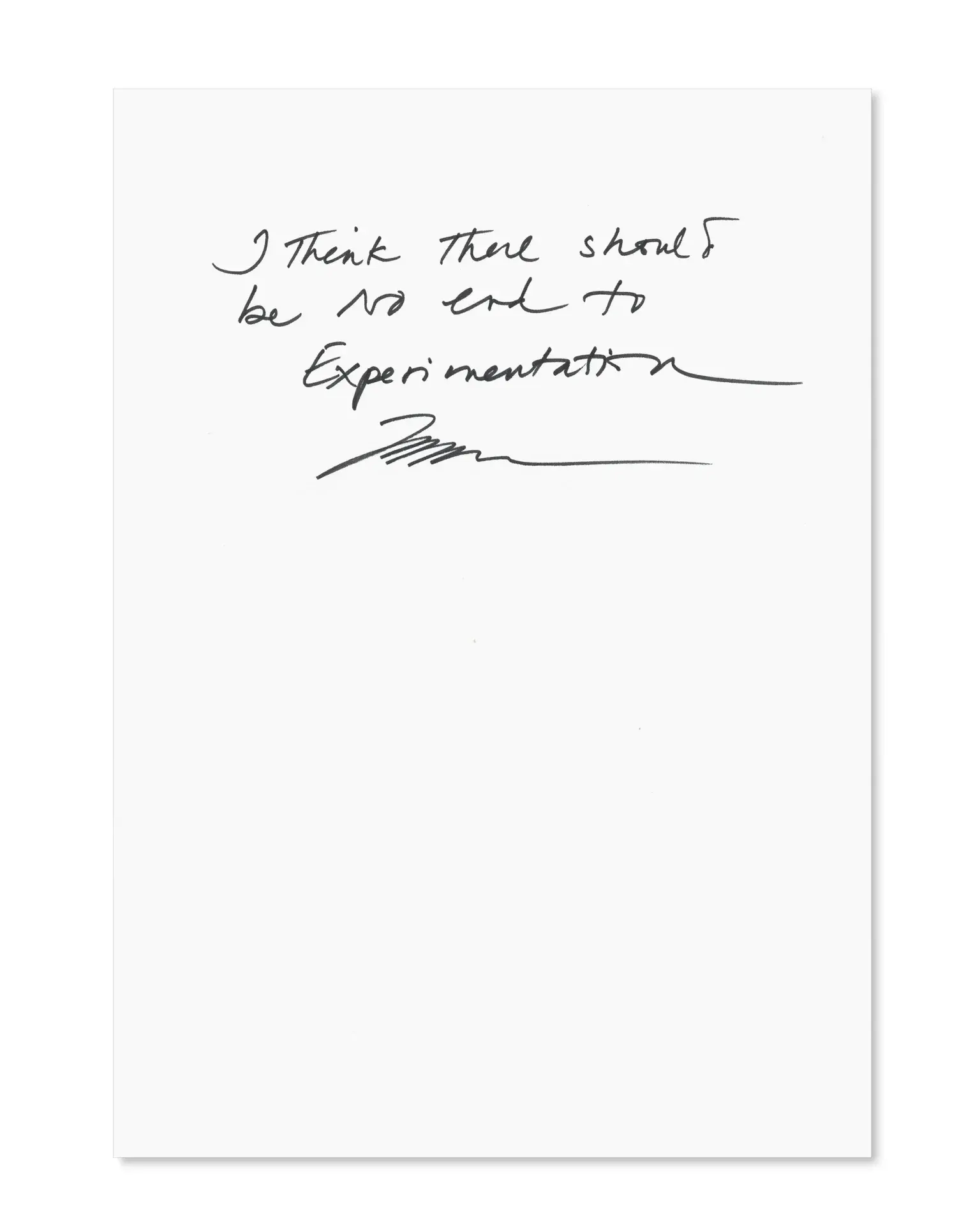
Hans Ulrich Obrist Archives Chapter 6: Zaha Hadid ‘I Think There Should Be No End to Experimentation’

  • Painting
  • |
  • Architecture

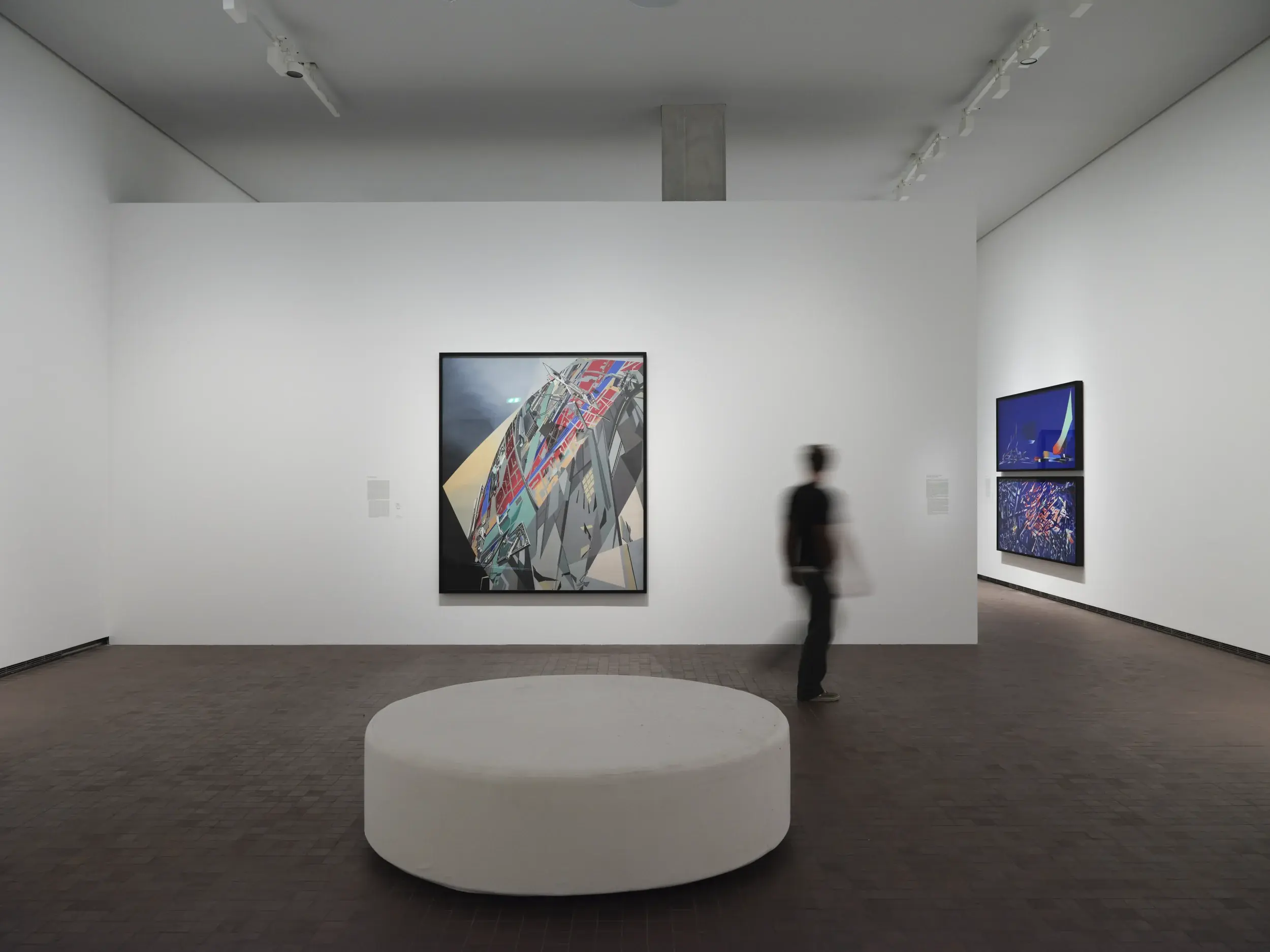
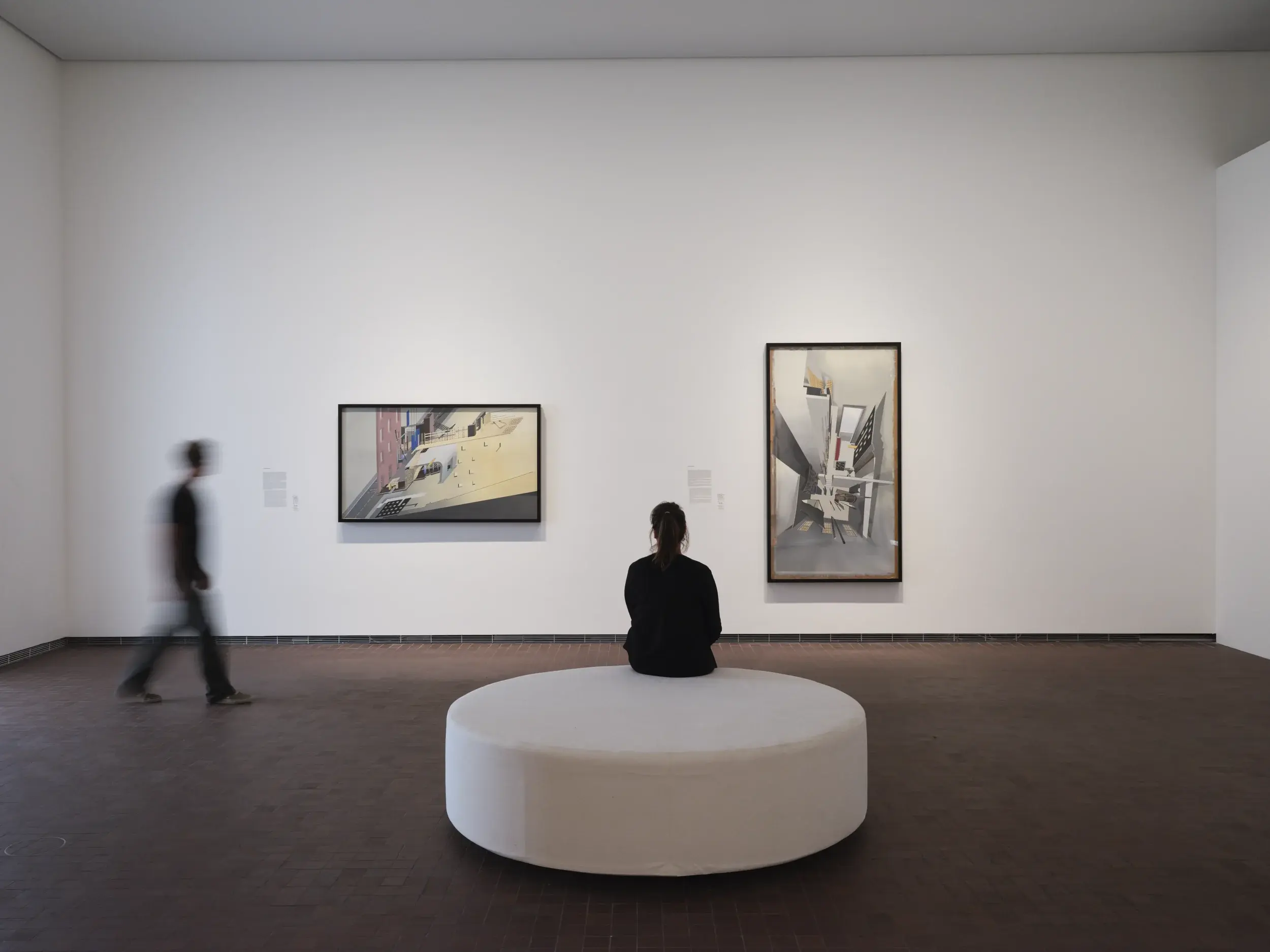
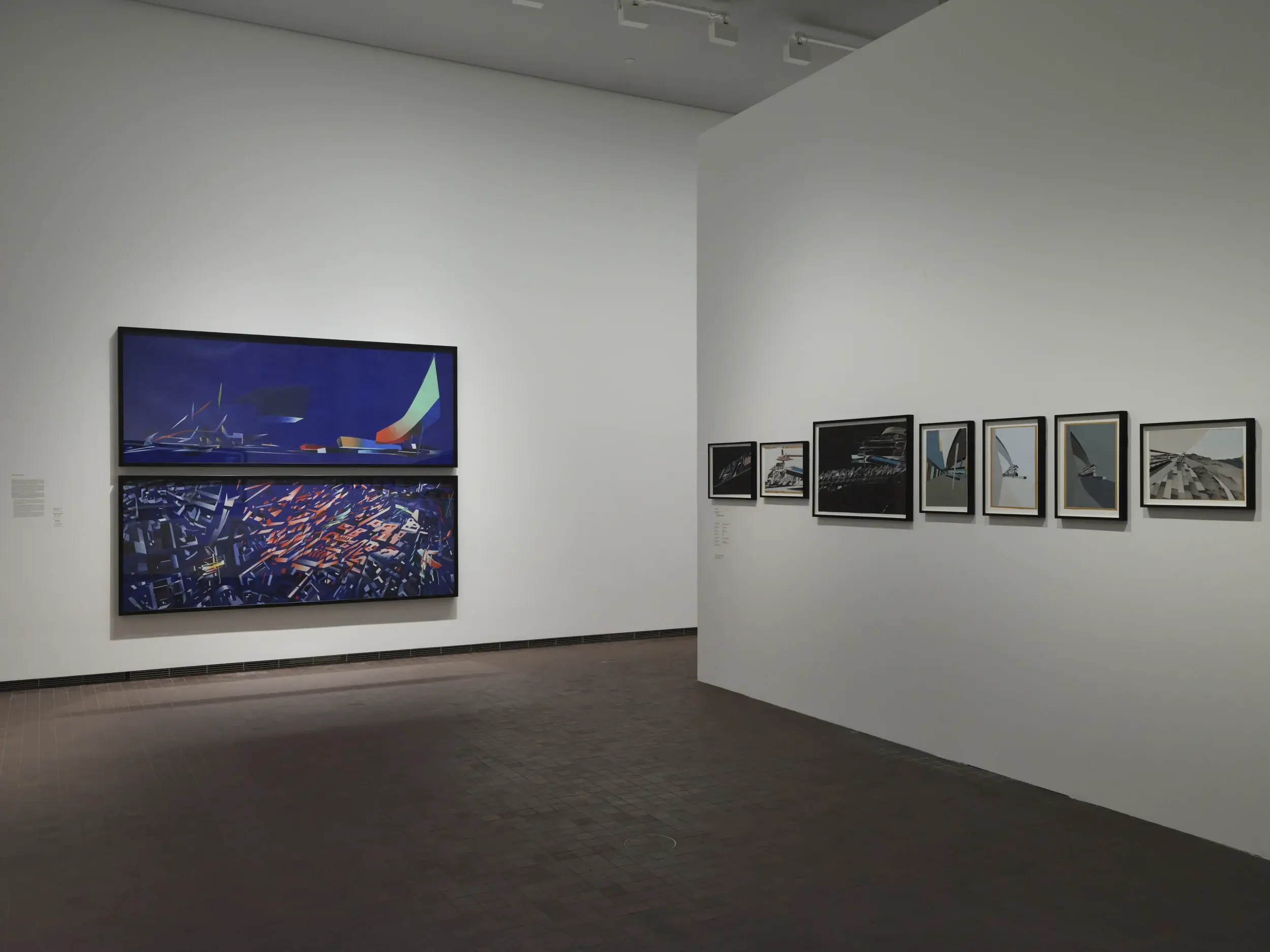
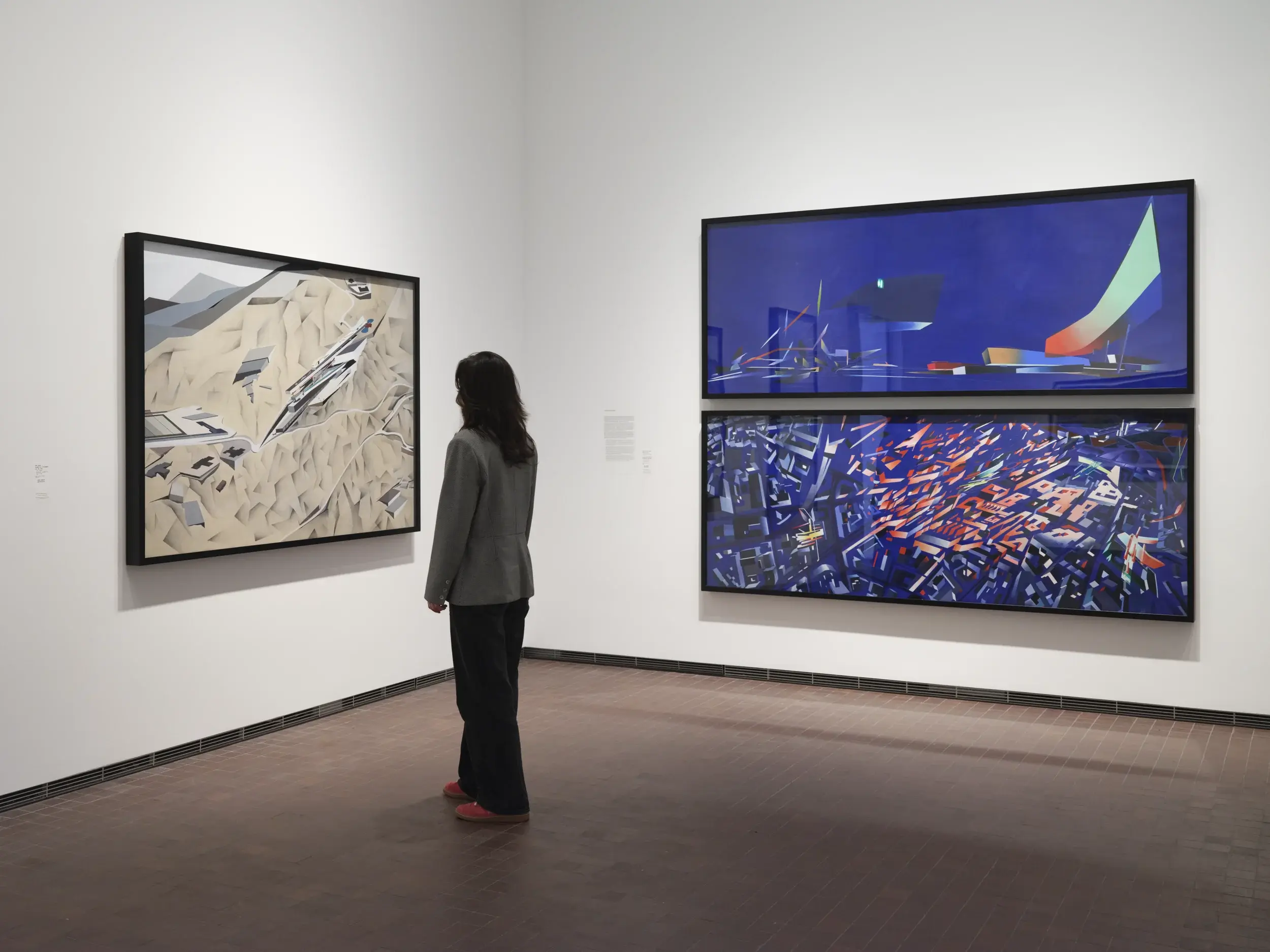
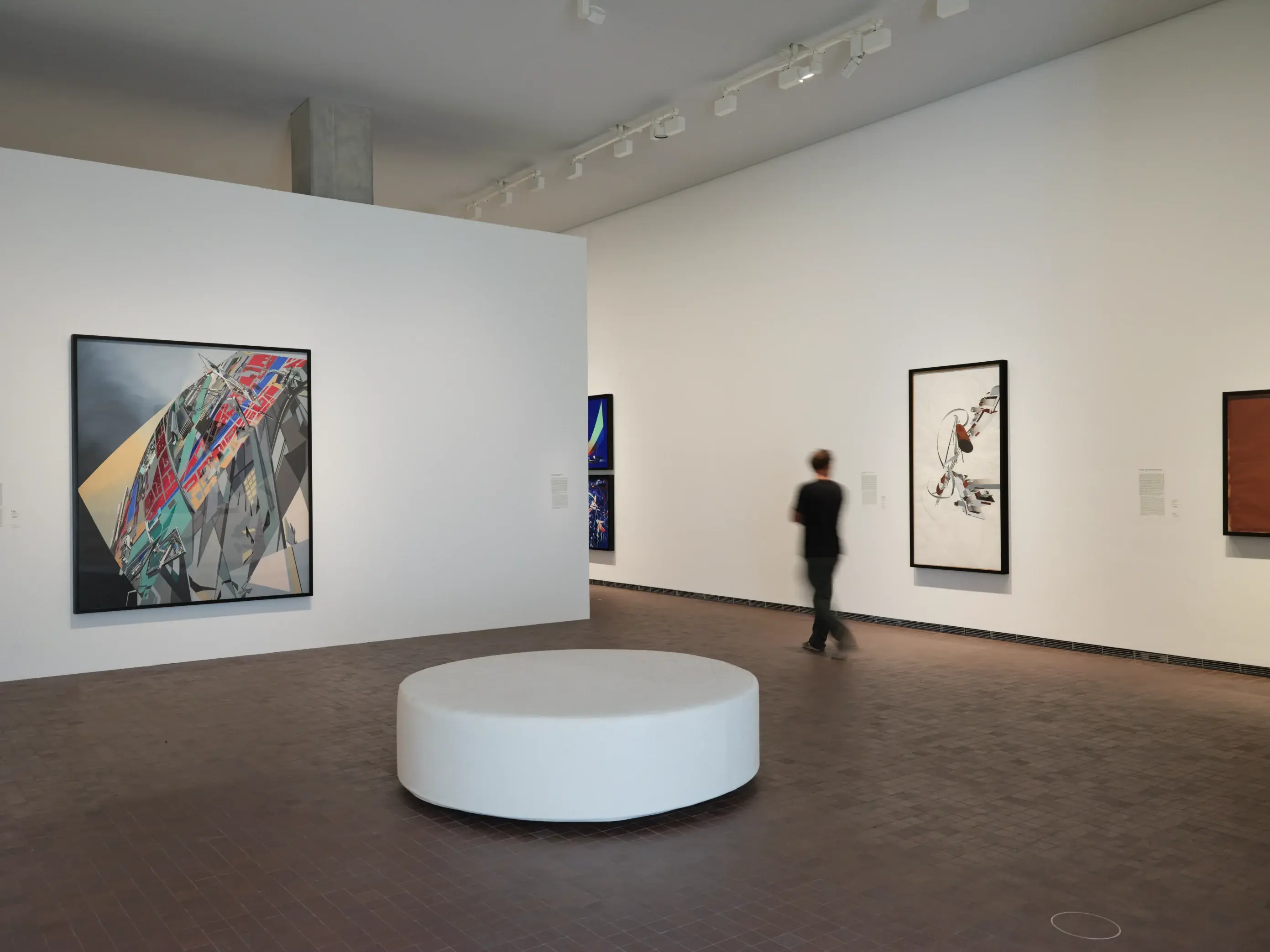
The sixth chapter of the Hans Ulrich Obrist Archives marks the tenth anniversary of Dame Zaha Hadid’s passing (b. October 31, 1950, Baghdad, Iraq–d. March 31, 2016, Miami, Florida). It honors a visionary architect who alters the horizon of contemporary architecture by using abstract painting as a method of spatial invention. Born into a liberal, secular Iraqi family, Hadid studies mathematics at the American University of Beirut before relocating to London to attend the Architectural Association (AA) in 1972. There, in the orbit of Rem Koolhaas and Elia Zenghelis, she explores the aborted, unrealized, or insufficiently tested experiments of Modernism and the Russian avant-garde. Through axonometric projection, multi-perspectival viewpoints, calligraphic line, and acrylic layering, she pushes architecture beyond the inertia of Euclidean geometry long before advanced software can help coordinate such complexity.

This exhibition revisits the long conversation between the curator and the legendary architect, which begins in the late 1990s when Obrist invites Hadid to realize Meshworks within the cycle La Ville, le Jardin, la Mémoire [The City, the Garden, the Memory] at the Villa Medici in 2000. Across encounters in London, Basel, Munich, and Paris in the early 2000s, that exchange becomes a sustained inquiry into the city, the museum, and the unfinished horizon of twenty-first-century urbanism. Hadid serves as a trustee of the Serpentine from 1996, and she designs its inaugural Pavilion in 2000 upon the invitation of Julia Peyton-Jones. Following Obrist’s appointment at the Serpentine in 2006, she participates in several of its Marathons, returns with her Lilas installation, inaugurated during the 2007 Summer Party, and later Zaha Hadid Architects completes the Serpentine North Gallery and The Magazine, its restaurant (2009–2013).

Among the many awards and honors she receives for expanding the disciplinary language of architecture, from becoming the first woman to win the Pritzker Architecture Prize in 2004 to the Stirling Prize in 2010 and 2011, being made a Dame Commander of the Order of the British Empire in 2012, and the RIBA Royal Gold Medal in 2016, Hadid’s double consecration across the architectural and museum worlds is equally striking. Her projects, installations, paintings, and drawings are the subject of major retrospectives during her lifetime at institutions such as SFMOMA in San Francisco in 1998, MAK in Vienna in 2003, the Solomon R. Guggenheim Museum in New York in 2006, and the State Hermitage Museum in St. Petersburg in 2015. Long before these honors and retrospectives, Hadid spends much of her early career earning a reputation as a paper architect, using the canvas as a laboratory in which architecture tests forms, movements, and worlds it does not yet know how to construct.

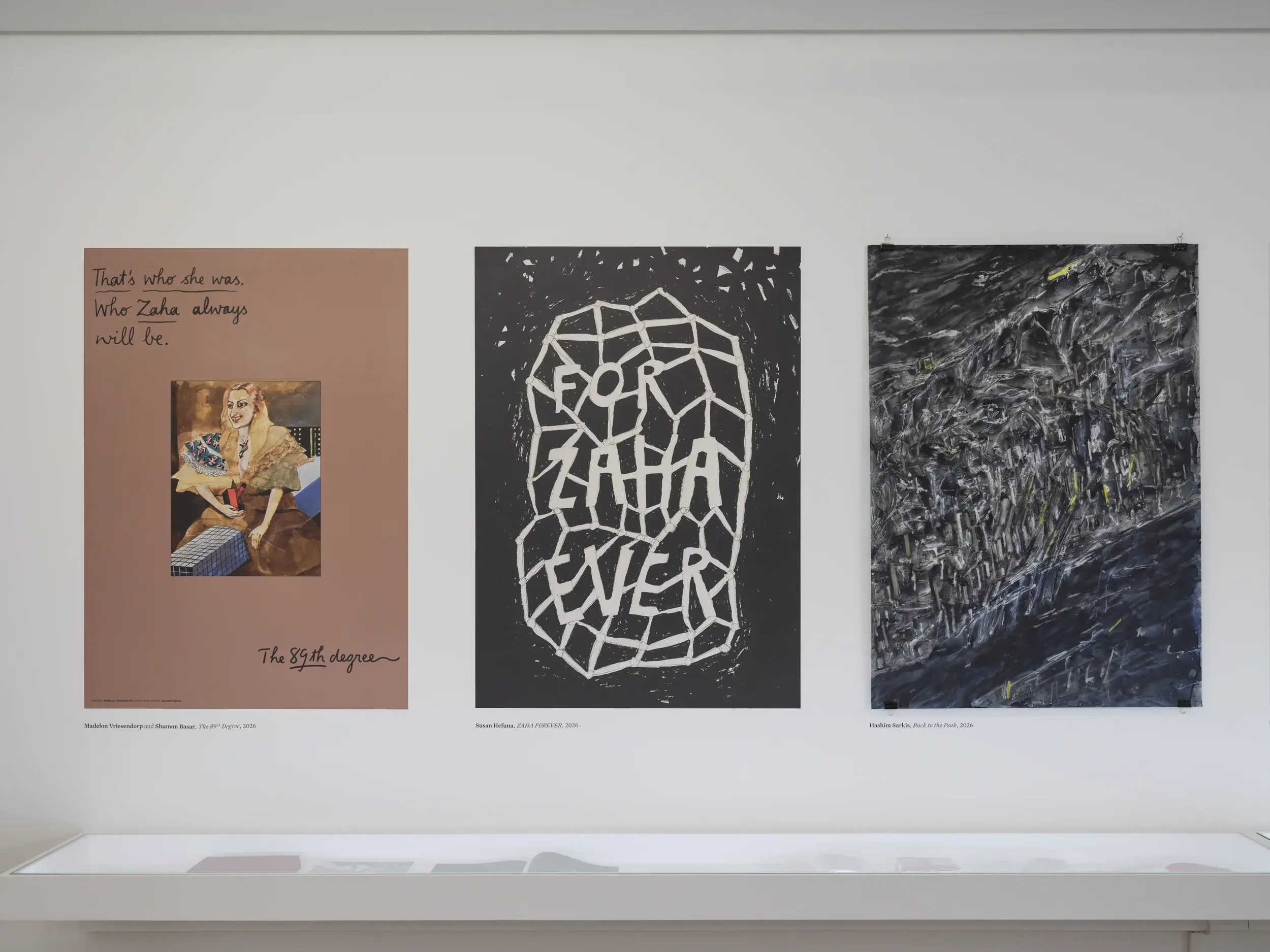
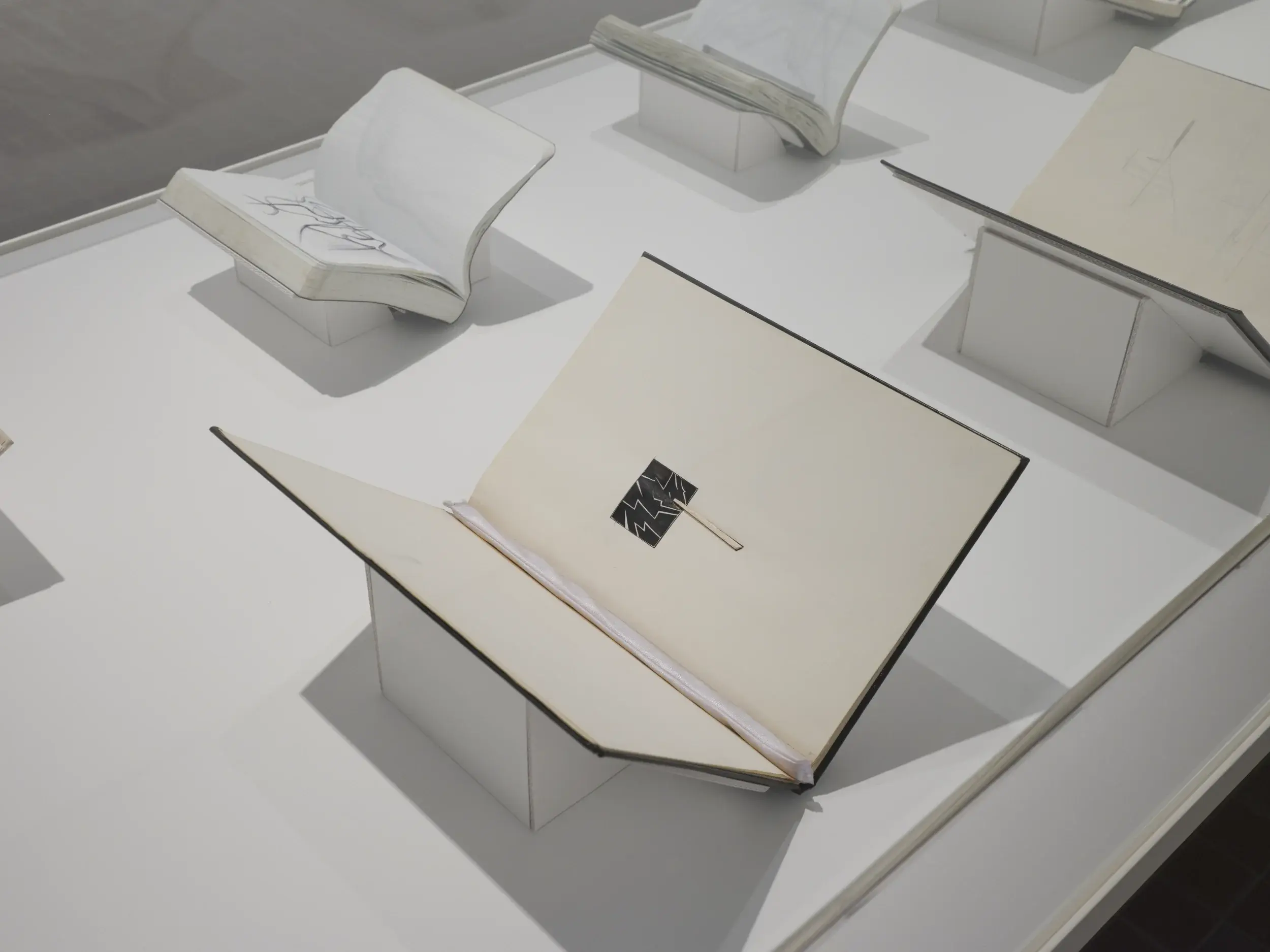
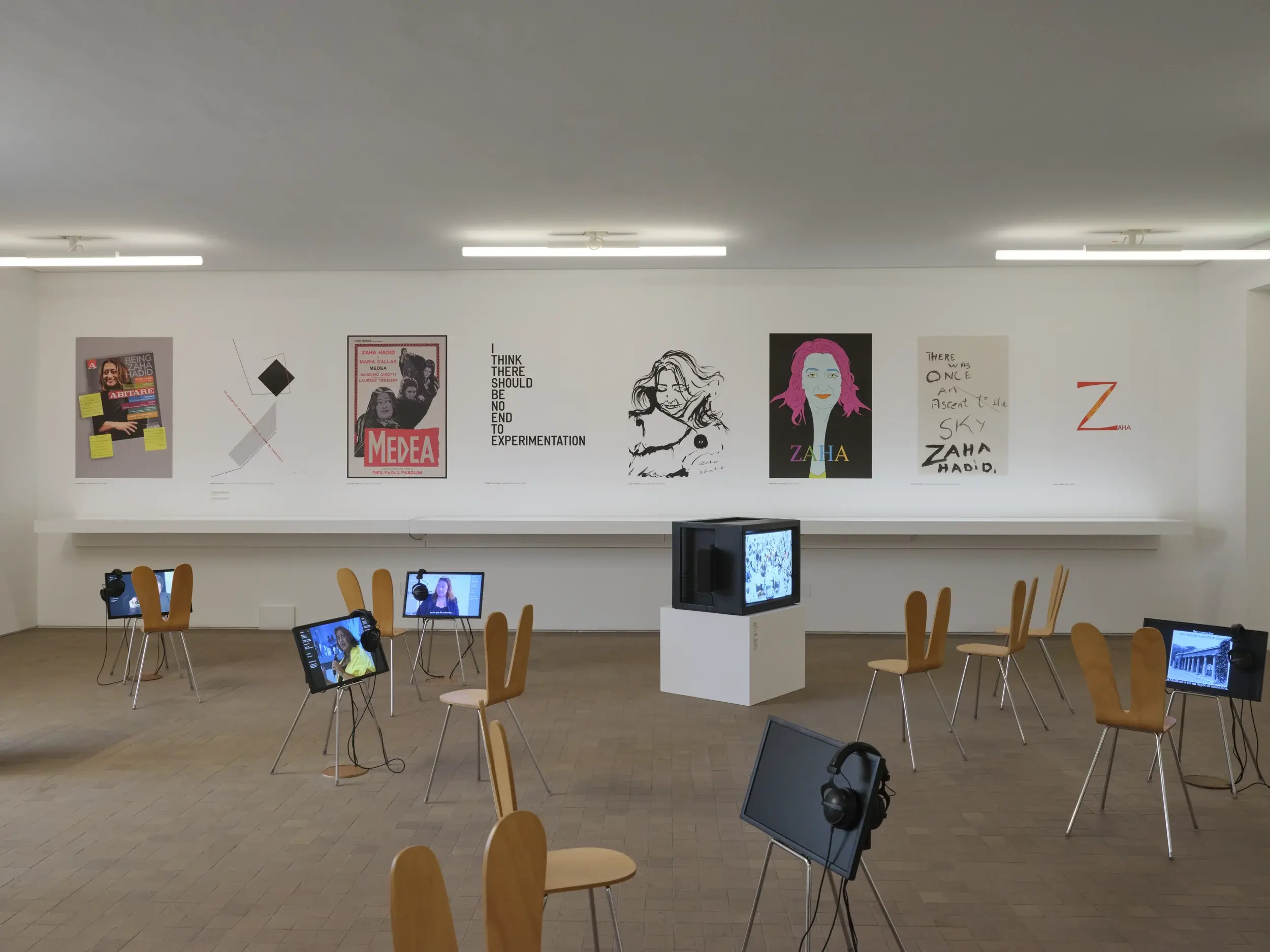
For the first time since the Serpentine’s posthumous exhibition Zaha Hadid: Early Paintings and Drawings in 2016, this landmark LUMA Arles exhibition brings together her early calligraphic paintings and notebooks–exercises in Suprematist geometry that inform her built projects, from her first completed building, the Vitra Fire Station in Weil am Rhein (1988–1993) to the CMA CGM Tower (2004–2011) in Marseille and Pierresvives (2002–2012) in Montpellier. Presented in The Tower in the Parc des Ateliers, designed by the late Frank Gehry, a close friend of Hadid’s, the show spans three interconnected chapters of her career as an architect: from Constructivism to her early projects and reception in the French context, to her longstanding relationship with Obrist. Through paintings, drawings, archival material, hours of previously unseen video interviews from 2001 to 2013, and posters realized by her peers and admirers, the exhibition reveals the full scale of a practice that moved with equal intensity between architecture, art, publication, and discourse, presenting Hadid not just as a builder of monuments, but as a restless philosopher of space.

In close collaboration with the Zaha Hadid Foundation.

Organized by:
Vassilis Oikonomopoulos, Artistic Director, LUMA Arles
Curators:
Hans Ulrich Obrist, Senior Advisor
Arthur Fouray, Curator and Archivist
With the assistance of: Lucas Jacques-Witz, Curator and Archivist Assistant

260429_LUMA_ZAHA_HADID_VICTOR&SIMON_GRÉGOIRE_DABLON_V2_40
Credits

Hans Ulrich Obrist Archives Chapter 6: Zaha Hadid ‘I Think There Should Be No End to Experimentation’, 2026 - 2027, The Tower, Living Archives Gallery and Cherry Tree Gallery, LUMA Arles, France.
© Victor & Simon / Grégoire d'Ablon

Zaha Hadid Foundation

Established by Dame Zaha Hadid (1950-2016), the Zaha Hadid Foundation is an independent charitable organisation dedicated to the legacy of the boundary breaking architect and her commitment to perpetual experimentation across architecture and related disciplines.

In addition to maintaining, disseminating and activating Hadid’s archive, the Foundation 
mounts public programs, supports education and emerging voices, and partners with a range of organisations both from its base in London, at 10 Bowling Green Lane and Shad Thames, 
and around the world. 

Inside Zaha Hadid's Exhibition

Hadid-I Think There Should Be No End to Experimentation - 1536 x 1920
Credits
© Zaha Hadid Foundation
260429_LUMA_ZAHA_HADID_VICTOR&SIMON_GRÉGOIRE_DABLON_V2_101
Credits
Hans Ulrich Obrist Archives Chapter 6: Zaha Hadid ‘I Think There Should Be No End to Experimentation’, 2026 - 2027, The Tower, Living Archives Gallery and Cherry Tree Gallery, LUMA Arles, France.
© Victor & Simon / Grégoire d'Ablon
260429_LUMA_ZAHA_HADID_VICTOR&SIMON_GRÉGOIRE_DABLON_V2_12
Credits
Hans Ulrich Obrist Archives Chapter 6: Zaha Hadid ‘I Think There Should Be No End to Experimentation’, 2026 - 2027, The Tower, Living Archives Gallery and Cherry Tree Gallery, LUMA Arles, France.
© Victor & Simon / Grégoire d'Ablon
260430_LUMA_ZAHA_HADID_VICTOR&SIMON_GRÉGOIRE_DABLON_V3_50
Credits
Hans Ulrich Obrist Archives Chapter 6: Zaha Hadid ‘I Think There Should Be No End to Experimentation’, 2026 - 2027, The Tower, Living Archives Gallery and Cherry Tree Gallery, LUMA Arles, France.
© Victor & Simon / Grégoire d'Ablon
260429_LUMA_ZAHA_HADID_VICTOR&SIMON_GRÉGOIRE_DABLON_V2_26
Credits
Hans Ulrich Obrist Archives Chapter 6: Zaha Hadid ‘I Think There Should Be No End to Experimentation’, 2026 - 2027, The Tower, Living Archives Gallery and Cherry Tree Gallery, LUMA Arles, France.
© Victor & Simon / Grégoire d'Ablon
260429_LUMA_ZAHA_HADID_VICTOR&SIMON_GRÉGOIRE_DABLON_V2_70
Credits
Hans Ulrich Obrist Archives Chapter 6: Zaha Hadid ‘I Think There Should Be No End to Experimentation’, 2026 - 2027, The Tower, Living Archives Gallery and Cherry Tree Gallery, LUMA Arles, France.
© Victor & Simon / Grégoire d'Ablon
260430_LUMA_ZAHA_HADID_VICTOR&SIMON_GRÉGOIRE_DABLON_V2_119
Credits
Hans Ulrich Obrist Archives Chapter 6: Zaha Hadid ‘I Think There Should Be No End to Experimentation’, 2026 - 2027, The Tower, Living Archives Gallery and Cherry Tree Gallery, LUMA Arles, France.
© Victor & Simon / Grégoire d'Ablon
Archives Hans Ulrich Obrist, Chapitre 6 _ Zaha Hadid, « Je pense que l’expérimentation ne devrait pas avoir de fin », 2026 - 2027, La Tour, Galerie des Archives et Galerie du Cerisier, LUMA Arles, France. - 2783 x 2087
Credits
Hans Ulrich Obrist Archives Chapter 6: Zaha Hadid ‘I Think There Should Be No End to Experimentation’, 2026 - 2027, The Tower, Living Archives Gallery and Cherry Tree Gallery, LUMA Arles, France.
© Victor & Simon / Grégoire d'Ablon
Portrait Zaha Hadid - 3379 x 2253

Zaha Hadid

Zaha Hadid (1950-2016) was one of the most influential architects of her time, globally recognised for pushing the boundaries of architecture and related arts. Born in Baghdad, she studied Mathematics at the American University of Beirut before enrolling at the Architectural Association in London, where she was awarded the prestigious Diploma Prize in 1977. In 1979 Hadid established her architectural office, winning the coveted competition for The Peak leisure club in Hong Kong in 1983. Her first building, the Vitra Fire Station in Weil am Rhein, Germany, was completed in 1993.

Incorporated in 1999, Zaha Hadid Architects went on to complete major projects worldwide, such as Contemporary Arts Center, Cincinnati (1997-2003), Phaeno Science Centre, Wolfsburg (1999-2005), MAXXI Museum, Rome (1998-2009), London Aquatics Centre (2005-2011/14), Heydar Aliyev Centre, Baku (2007-2012), and Galaxy Soho, Beijing(2008-2012).

Hadid taught throughout her career, including at the Architectural Association, Columbia, Harvard, Yale, and the University of Applied Arts in Vienna. She was the first woman to win the Pritzker Prize in 2004, and the first in her own right to receive the RIBA (Royal Institute of British Architects) Royal Gold Medal for her lifetime’s work in 2015. She received the Stirling Prize in both 2010 and 2011, was appointed CBE (Commander of the Order of the British Empire) in 2002 and made a Dame in 2012 for her services to architecture.

Photo: © Brigitte Lacombe