In the Veins
- Video installation
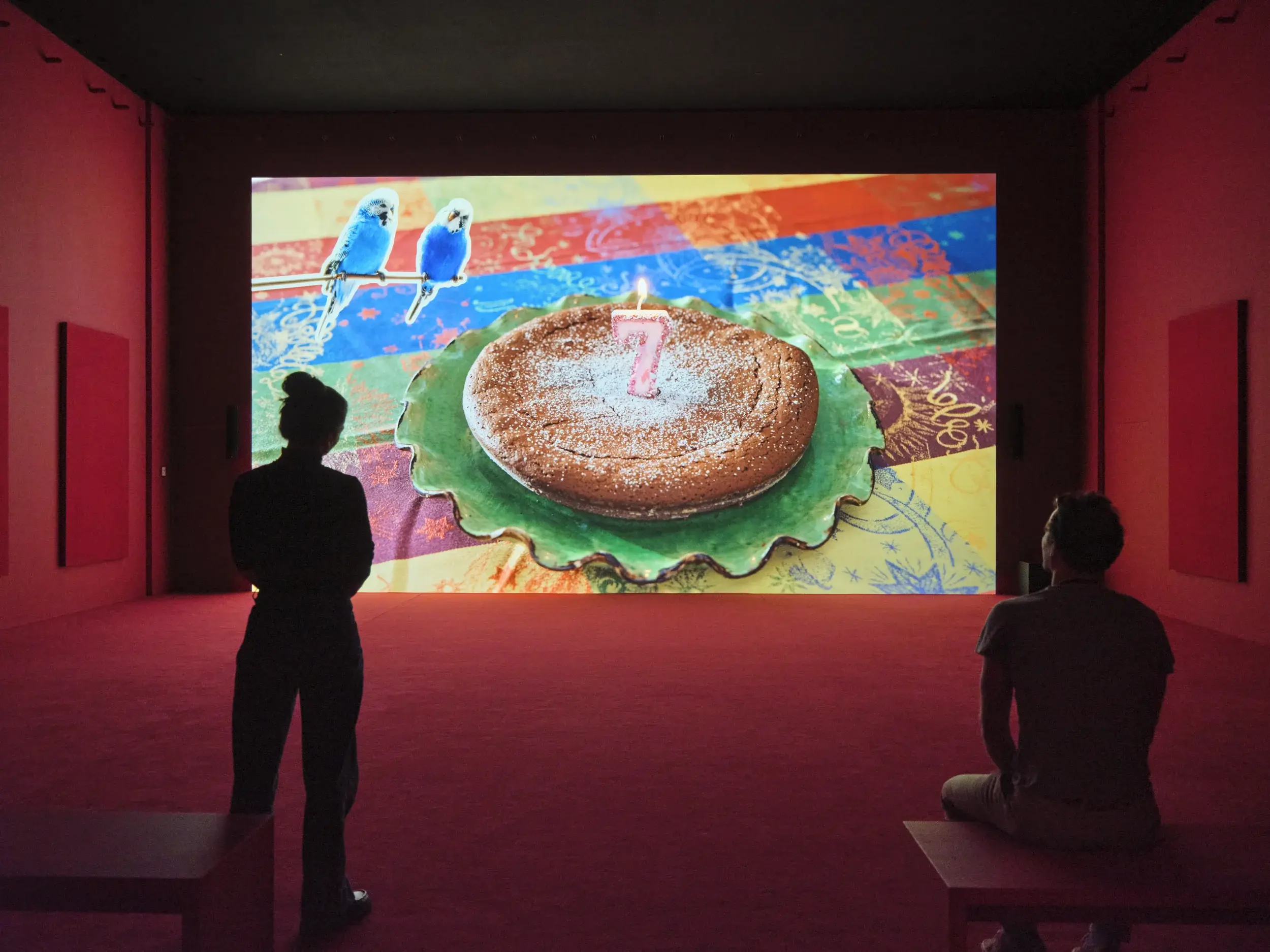
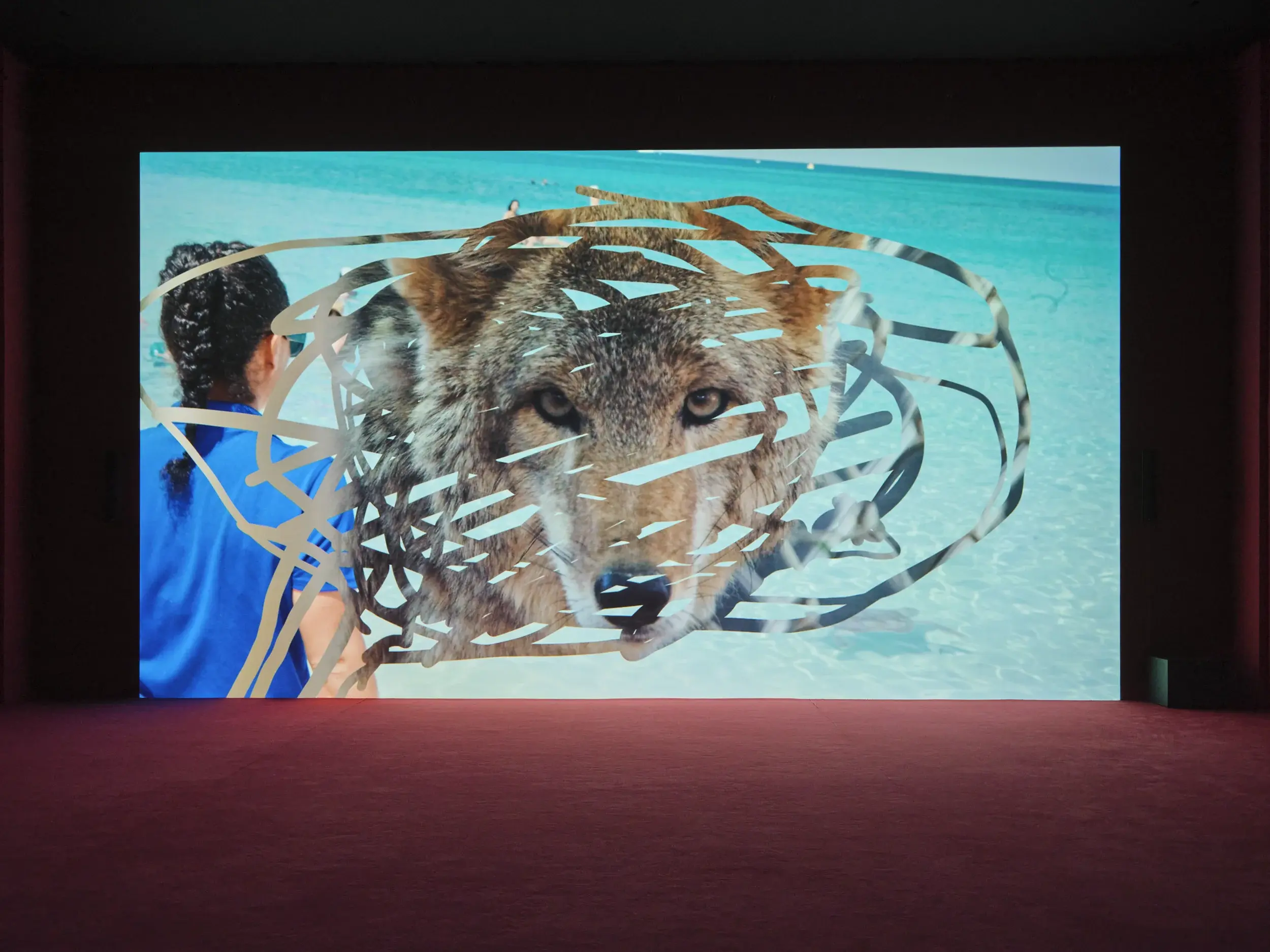
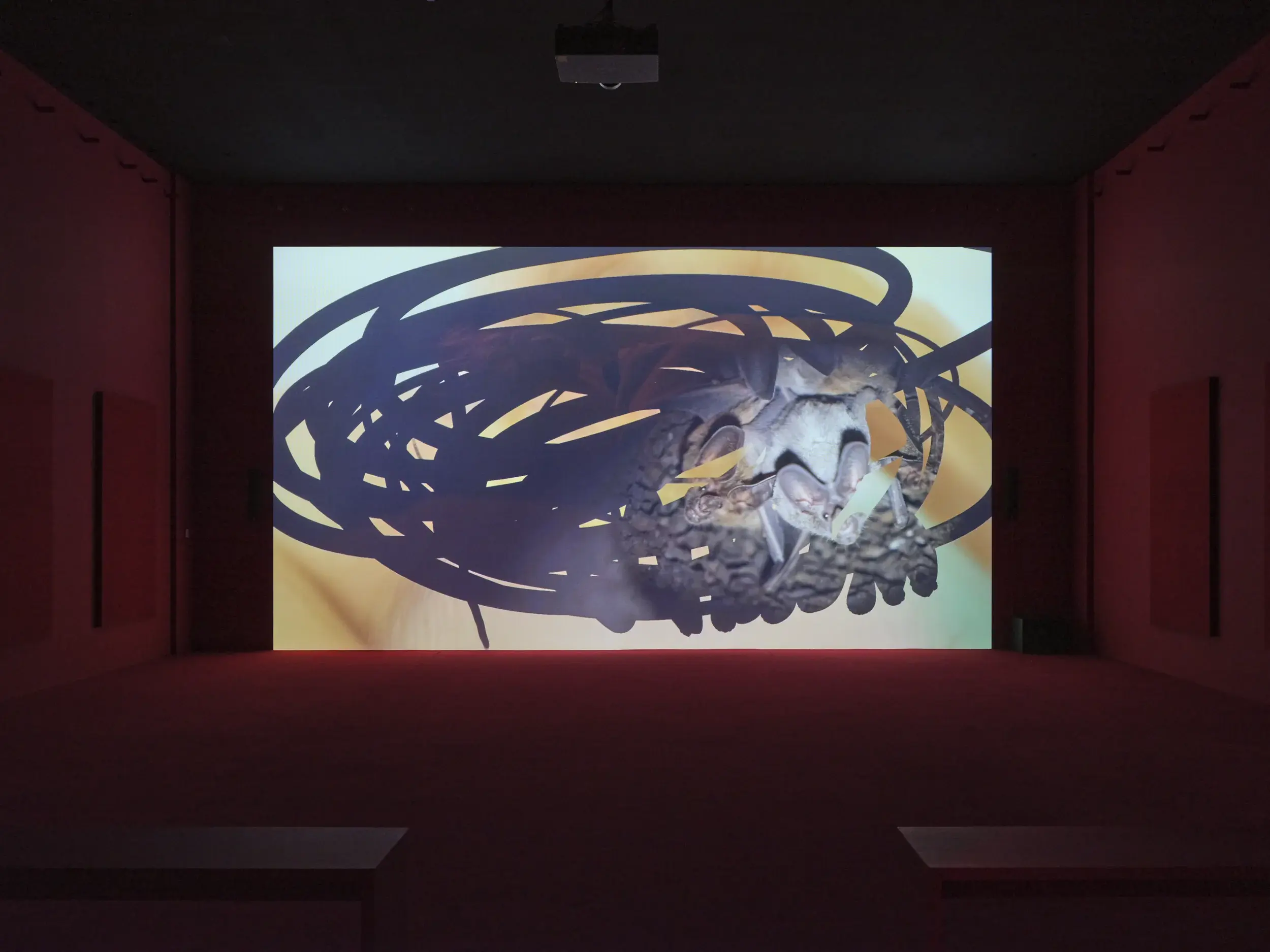
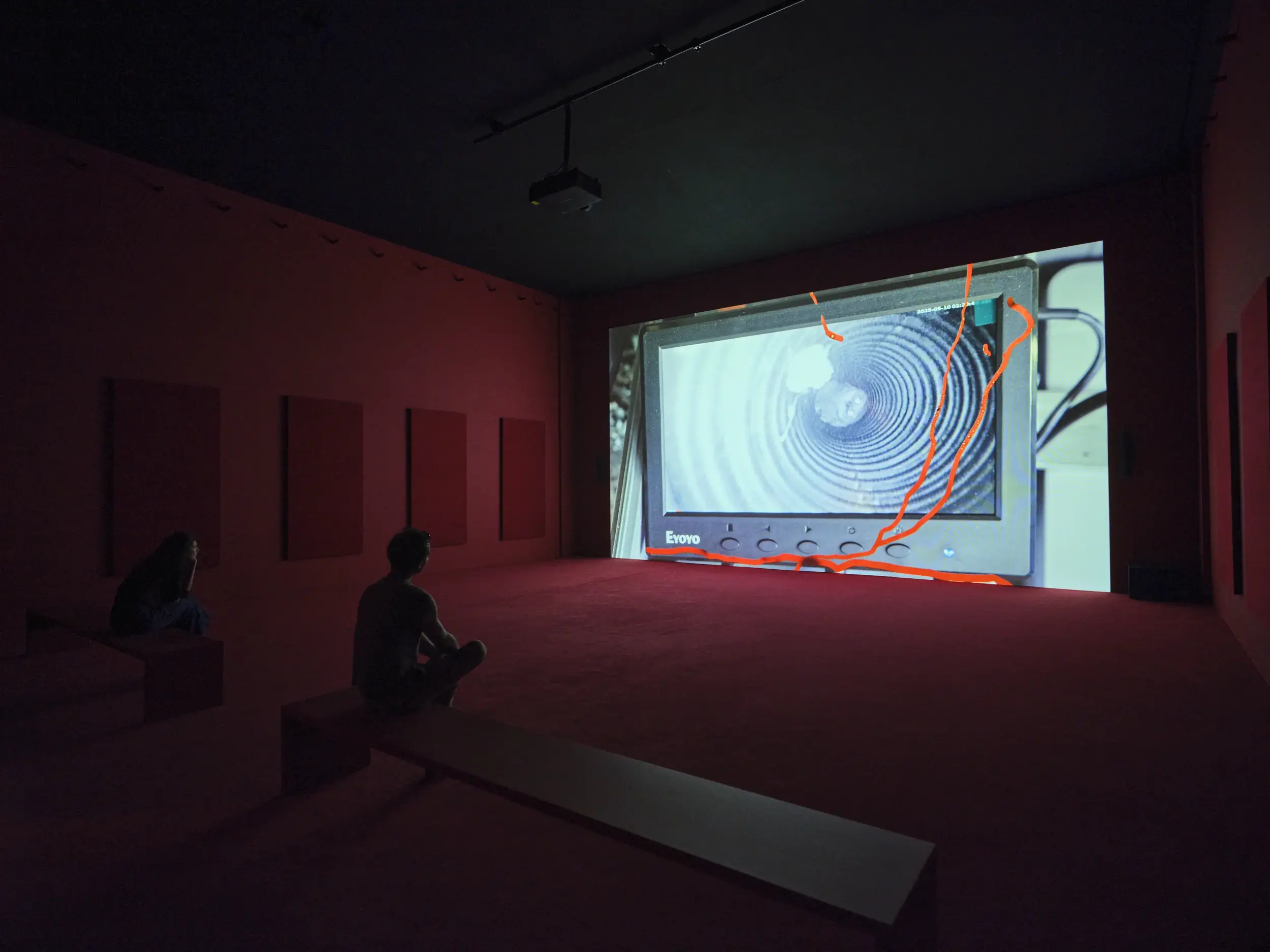
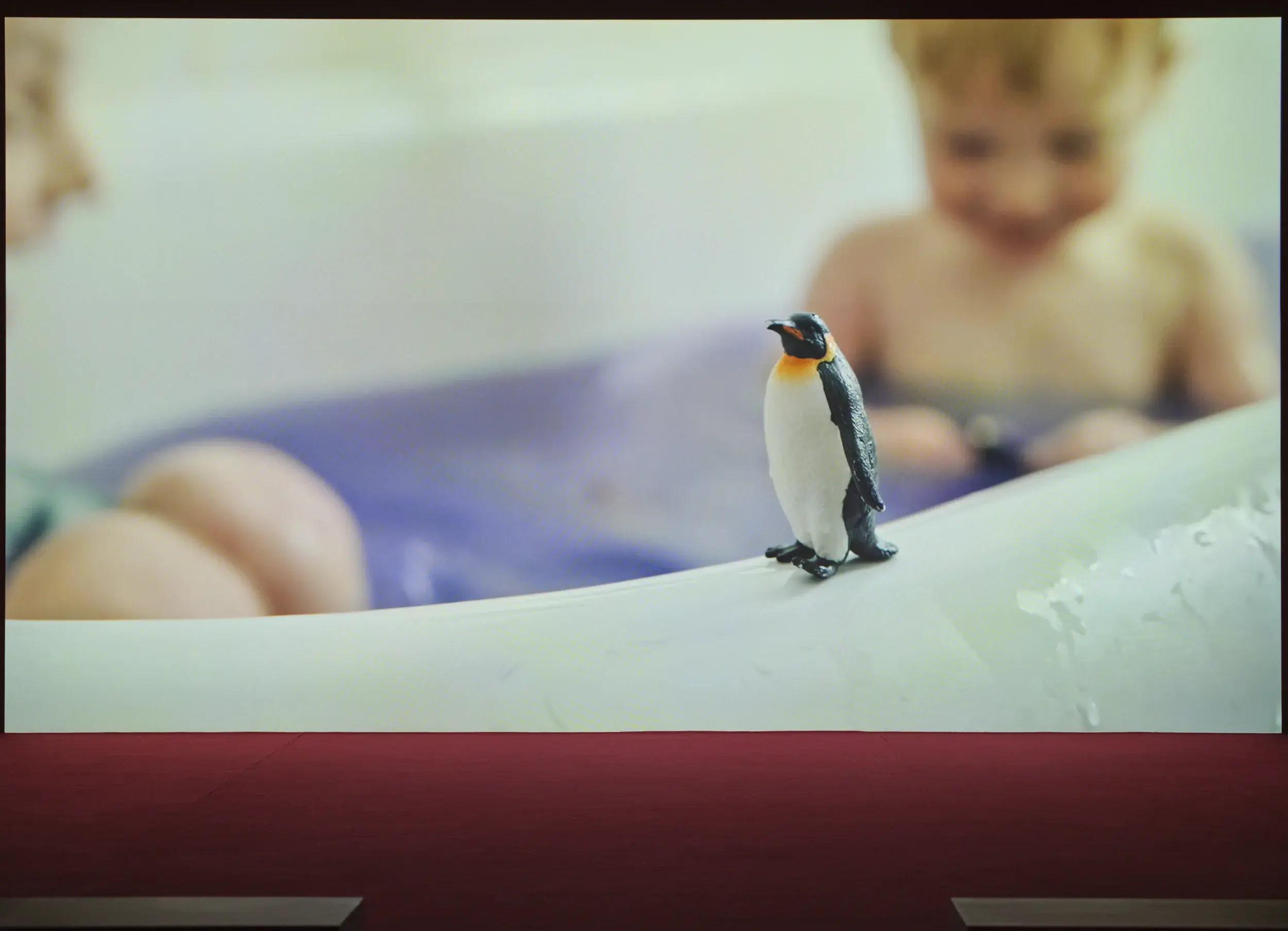
In the Veins is a significant new film by Camille Henrot, one of the leading artists of her generation. The film deals with raising children in a time of climate crisis and mass extinction. At its center lies ecological grief: the intimate, daily experience of living with irreversible loss. Rather than addressing this condition as an abstract planetary issue, Henrot brings it into the realm of ordinary life, where care, fear, love, and responsibility are most acutely felt.
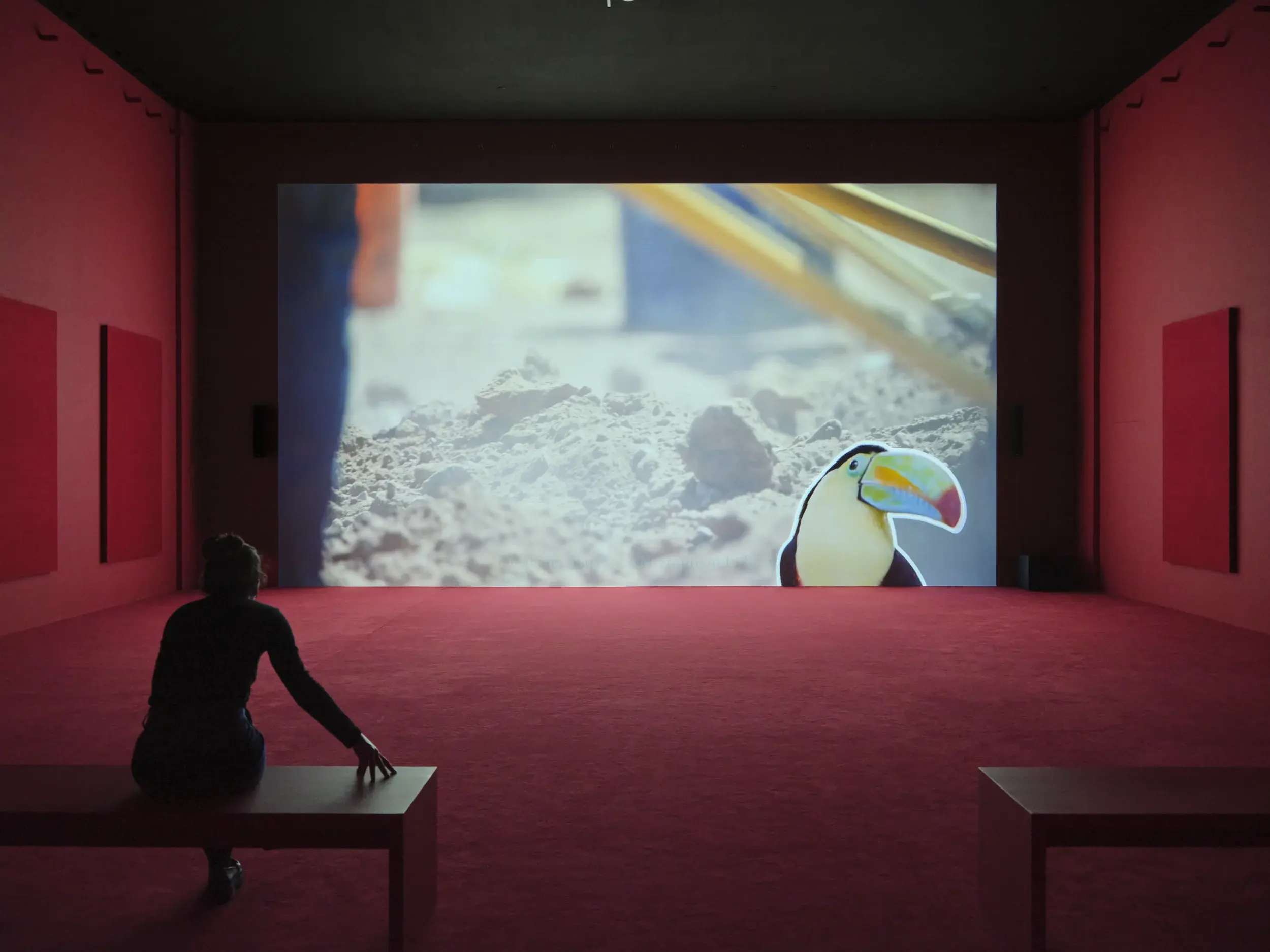
The work begins with a simple but troubling contradiction. Animals are everywhere in childhood. They populate books, toys, songs, and the earliest lessons through which children learn to name the world. Yet many of these same animals are endangered, displaced, or disappearing. To read a child an alphabet book and arrive at “J for jaguar” or “P for polar bear” is to confront a profound gap between representation and reality. The film lingers over this dissonance, asking what it means to inherit a symbolic world full of animal life while passing on a damaged world in which that very life is increasingly under threat.
From this perspective, parenting and ecology emerge as deeply connected practices of care. Both are concerned with vulnerability, dependence, maintenance, and survival. Both stand in opposition to a culture that privileges novelty, speed, and consumption over repair, endurance, and responsibility. In the Veins presents care not as a secondary or private matter, but as an ethical and political act. The gestures through which life is sustained, tending, feeding, cleaning, protecting, repairing, are treated as central to any meaningful ecological consciousness.
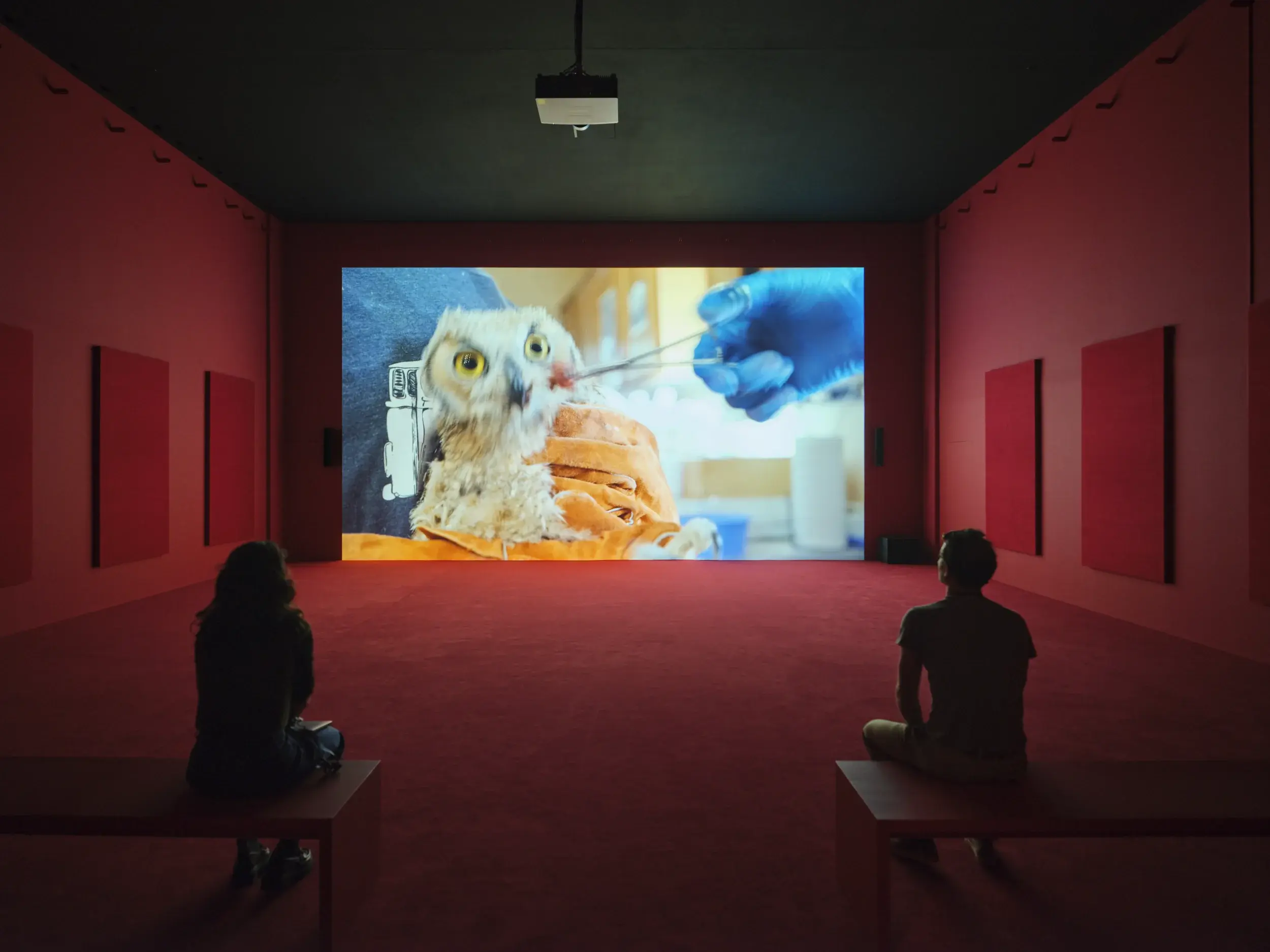
This logic extends to the film’s images of wildlife rehabilitation centers, where injured animals are treated after direct encounters with the violence of human systems, such as poisoned environments, damaged habitats, or fractured ecologies. These sites make visible both destruction and repair. They show forms of care grounded not in mastery or possession, but in patience, restraint, and proximity without domination. In this sense, caring for wild animals echoes the labor of raising children, where there is no perfect outcome, only the necessary work of helping another life endure.
The film is shaped by a meditation on time. Repetition, so central to caregiving, becomes one of its formal principles. Against the dominant logic of linear progress, the work turns toward cyclical rhythms, for example day and night, seasons, but also growth, return, exhaustion and renewal. This matters because the climate crisis often escapes ordinary perception, unfolding too slowly to register as an event and too quickly for society to respond. Childhood follows a similar temporal logic, being continuous, transformative, and difficult to grasp while it is taking place.
Through its structure, sound, and editing, In the Veins proposes that acts of care in the midst of destruction are not minor gestures, but forms of courage. To care for a child, an animal, or a damaged world is, ultimately, to resist despair by remaining accountable to life.
Organized by: Vassilis Oikonomopoulos, Artistic Director
Practical Information
Victor & Simon / Grégoire d'Ablon
Inside Camille Henrot's Exhibition
Victor & Simon / Grégoire d'Ablon


Camille Henrot
Camille Henrot (born 1978, France) is recognized as one of the most influential voices in contemporary art today. Over the past twenty years, she has developed a critically acclaimed practice, encompassing drawing, painting, sculpture, installation and film. Inspired by literature, second-hand marketplaces, poetry, cartoons, social media, self-help, and the banality of everyday life, Henrot’s works capture the complexity of living as both private individuals and global citizens in an increasingly connected and over-stimulated world.
In 2013, Henrot received widespread critical acclaim for her film Grosse Fatigue, made during a fellowship at the Smithsonian Institution and awarded the Silver Lion at the 55th Venice Biennale in 2013. The film was recently ranked #7 by ARTnews in a list of the 100 Best Artworks of the 21st Century. Henrot elaborated ideas from Grosse Fatigue to conceive her acclaimed 2014 installation The Pale Fox at Chisenhale Gallery in London, which has since toured to multiple collaborating venues. In 2017, Henrot was given carte blanche at Palais de Tokyo in Paris, where she presented the major exhibition Days Are Dogs.
Henrot is the recipient of the 2014 Nam June Paik Award and the 2015 Edvard Munch Award, and has participated in the Lyon, Berlin, Sydney and Liverpool Biennials, among others. Henrot has had numerous solo exhibitions worldwide, including the New Museum, New York; Schinkel Pavilion, Berlin; Art Sonje Center, Seoul; Fondazione Memmo, Rome; and Tokyo Opera City Art Gallery, Japan, among others. Her work is held in the collections of the Museum of Modern Art in New York City, the Guggenheim, the Centre Pompidou, and the National Gallery of Victoria, among others.
In 2026, Henrot will premiere her new film In The Veins at the New Museum, New York and LUMA, Arles. She will also present a major performative survey exhibition at Copenhagen Contemporary, and will debut her first theatrical piece Commedia dell’Arte at the Aspen Art Museum’s AIR Festival, a co-commission between Performa, Aspen Art Museum and LYRA Art Foundation. Henrot’s first public commission in New York City with Public Art Fund will also be unveiled in September, remaining on view in Central Park until August 2027.